Free Interior Design Software for Beginners: Best Free Tools to Start With
Compare free interior design software for beginners, from floor plans and mood boards to spec sheets, and see when free tools stop being enough for client work.
Table of contents
Share
Free interior design software is a good place to start if you are learning floor plans, mood boards or product organisation. The best beginner setup is usually a mix of simple tools: one for layouts, one for visual ideas and one place to keep product details tidy as your projects become real.
If you are an aspiring designer, student designer or early-stage freelancer, free tools let you practise without a big software bill. The point is not to stay on free tools forever. It is to learn the workflow, understand where each tool helps and notice when free starts to break down for client work.
Here is how to choose free interior design software for beginners, where each tool fits and when thesheet becomes useful for organising the product decisions behind the design.
What is the best free interior design software for beginners?
The best free interior design software for beginners depends on the job: SketchUp Free is useful for 3D layouts, Roomstyler is good for quick room planning, Canva works well for mood boards and thesheet helps organise spec sheets and product lists. A beginner does not need one tool that does everything. Start with the tool that matches the part of interior design you are practising now.
What to Look for in Interior Design Software as a Beginner
Choosing the right software at the start makes learning interior design much easier. The best tools should help you experiment, practise and grow your skills, not leave you lost in tutorials before you have made anything.
1. Free or Affordable
When you are just starting out, expensive software usually does not make sense. Look for free or budget-friendly tools that let you explore without financial pressure. A free plan is enough for practising the basics, testing a small room concept or organising your first project.
2. User-Friendly
Good software should feel clear even if you have never used it before. If it takes hours just to understand the basics, it may not be the right first tool. The best beginner tools let you start designing, planning or organising with minimal setup.
3. Grows with you
The ideal tool is not only beginner-friendly. It should also help you keep better habits as your work becomes more serious. That way, you are not rebuilding your workflow from scratch once you move from practice projects to real client projects.
4. Keeps Projects Organised
Interior design is not just choosing colours and furniture. You also need to track floor plans, materials, products, supplier links, prices and client preferences. Good software helps you keep those details in one place, so the project does not become a folder of screenshots and half-finished notes.
Finding the right software can make or break your learning experience. Let’s look at the free tools that help with different parts of the work.
The Best Free Interior Design Software for Beginners
The best way to learn interior design is by getting hands-on. Whether you are sketching floor plans, building mood boards or collecting products, beginner-friendly tools can help you practise without the frustration of complex interfaces or heavy subscriptions.
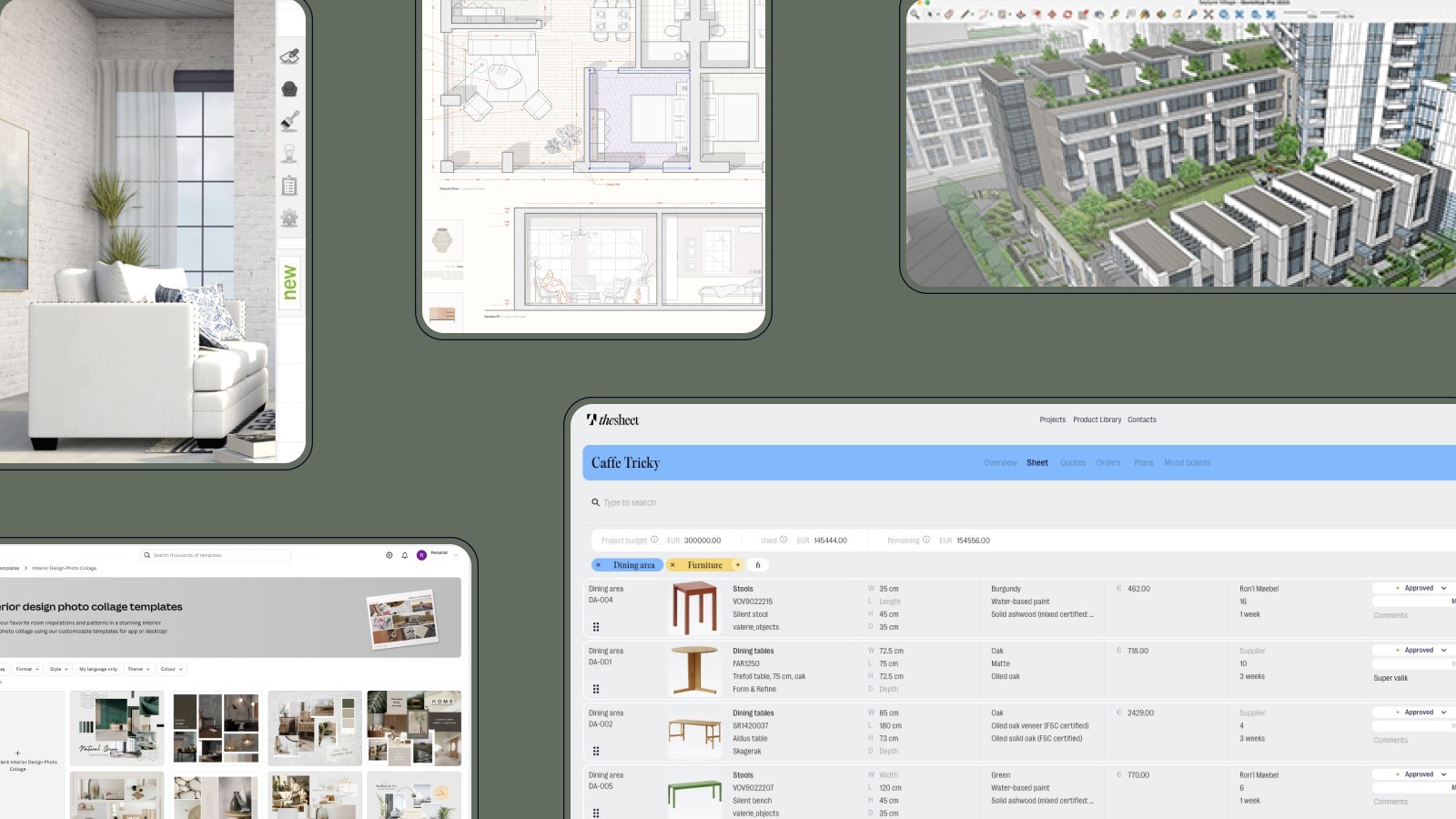
Plenty of good options
thesheet – Best for Spec Sheets and Project Organisation
Interior design is creative work, but it also has a lot of admin behind it. thesheet helps you organise spec sheets, product lists, project notes and client-facing selections in one place. It is useful when you are learning how real design projects are structured, especially once a mood board turns into actual products, dimensions, suppliers and decisions.
thesheet has a free Solo plan with one active project, so you can practise organising a real project without committing to a paid setup.
SketchUp Free – Best for 3D Modeling and Floor Plans
SketchUp is one of the most popular tools for 3D modelling and architectural design. The free web-based version is useful for beginners who want to practise layouts, room shapes and basic spatial ideas. If you need more advanced features later, SketchUp also has paid plans.
Roomstyler – Best for Quick Simple Room Design
Roomstyler is a straightforward drag-and-drop tool for trying furniture layouts and room styles. It runs in the browser, so there is nothing to install, and it is simple enough for complete beginners to test ideas quickly.
Canva – Best for Mood Boards and Presentations
Mood boards help you bring a design direction together before you specify actual products. Canva makes this easy with templates, images and presentation tools. It is not a professional spec sheet system, but it is a useful beginner tool for visualising ideas and presenting them clearly.
Rayon – Best for Floor Plans
Rayon is a browser-based tool for drawing floor plans. It includes templates and blocks that help beginners get started with layouts, though some advanced features require a paid plan. It can be a useful step between rough sketches and more detailed planning.
These tools let you learn at your own pace. Start with the part of the process you need most: layout, visuals or organisation.
Where free interior design software starts to break
Free tools are fine when you are learning or working on a small practice project. They start to break when the project has real clients, multiple product decisions, supplier details, pricing, alternatives and revisions. That is usually the point where a folder of screenshots, links and spreadsheets becomes hard to trust.
For client work, the risk is not only that things look messy. It is that the wrong product detail gets copied, an old price stays in a spreadsheet or the client sees a version that no longer matches the plan. A beginner who learns to keep spec sheets organised early is building a habit that still matters later.
The Most Common Beginner Mistakes and How the Right Tools Help
Starting out in interior design, there is a lot to learn and it is easy to fall into a few common traps. The right tools help you stay focused on the work instead of fighting the setup.
Trying to Learn Everything at Once
It is tempting to jump straight into advanced software, but that can lead to information overload. Learning interior design takes time. Beginner-friendly tools reduce the learning curve and let you focus on one skill at a time.
Using the Wrong Tool for the Job
Not all design software does the same thing. Some tools are better for 3D modelling, some for floor plans, some for mood boards and some for keeping product details organised. Choosing the right tool for the task saves time and keeps the project clearer.
Forgetting About Organisation
Interior design has a lot of details behind the visual work. Losing product links, forgetting where you saved dimensions or rebuilding a spec sheet from scratch can turn a simple project into a mess. A simple spec sheet tool keeps the practical details close to the design decisions.
How thesheet Helps Beginners Stay Organised
thesheet is useful once your project has products to track. You can organise furniture, lighting, materials and other selections in spec sheets instead of keeping everything across emails, notes, browser tabs and spreadsheets.
The Product Clipper helps you save product details from supplier websites into your project. As you add items, you also build your own product library, so the work you do on early projects can become useful later.
The free Solo plan includes one active project. That is enough to practise a real workflow without turning your first project into admin.
See the benefits of thesheet in 2 minutes
Get Started with the Right Tools
The best free interior design software for beginners is the tool that helps you practise the next part of the work. Use layout tools for planning rooms, mood-board tools for visual direction and a spec sheet tool when you need to organise the products behind the design.
Free tools are a good start. As soon as a project has real product decisions, client feedback and supplier details, organisation becomes part of the design work. That is where thesheet can help.
Try thesheet for free to start managing projects like a pro from day one
Start with the free Solo plan and organise one active project in thesheet. No commitment, just a cleaner way to keep product details, spec sheets and project decisions together.